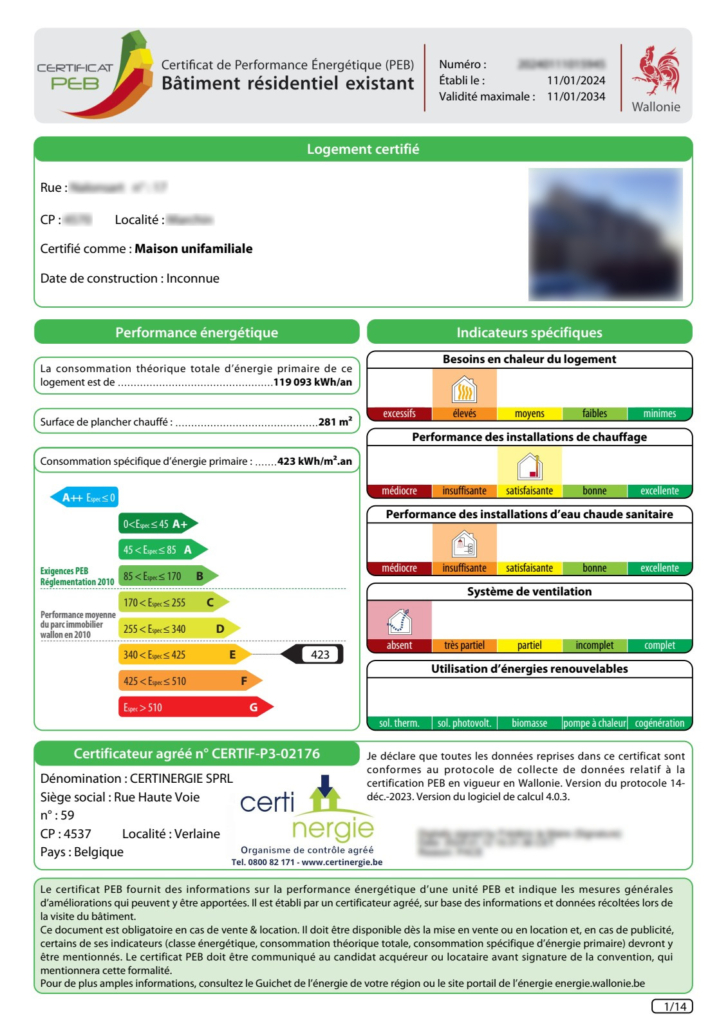
Complete guide – 3 regions
Official sources

Prepare the visit of your EPC expert

Good preparation is the key to a better EPC certificate. Without evidence, the assessor applies unfavourable default values. With the right documents, your score reflects the reality of your property — often much better.

This guide covers the 3 Belgian regions with the official lists of acceptable evidence.
Order my EPC Learn more about the EPC

+50 000
EPC certificates issued

The impact is real

Without documents vs. with documents

The assessor records what they visually observe or what acceptable evidence demonstrates. Without proof, they must use default values — almost always unfavourable.

Without document
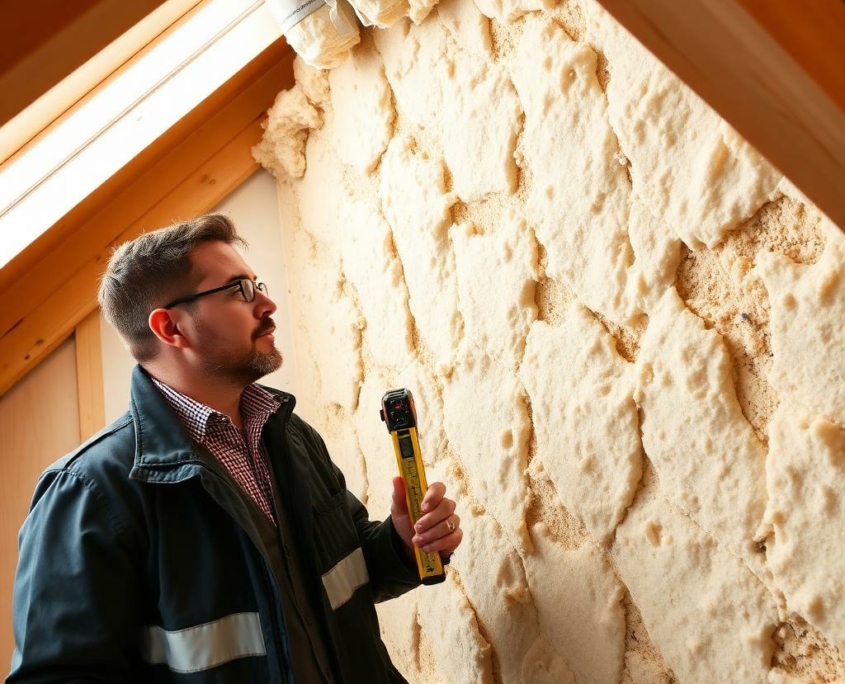
The assessor cannot see the insulation behind the attic finish → cannot confirm the roof is insulated

With documents
The insulation invoice + jobsite photos prove the attic is insulated with 15 cm mineral wool

→ Up to 2 EPC classes of difference

Without document
Double glazing observed but technical characteristics unknown (U value, year) → default values applied

With documents
The energy grant letter or markings on the spacer demonstrate high-performance glazing (Ug < 1.1)

→ Significant impact on the score

Without document
Insulation visible on the façade but thickness and type unknown → minimum value applied

With documents
Invoice + quote mentioning 8 cm XPS on the façade → real value entered

→ Better wall performance

Acceptable evidence

Documents to gather for your assessor

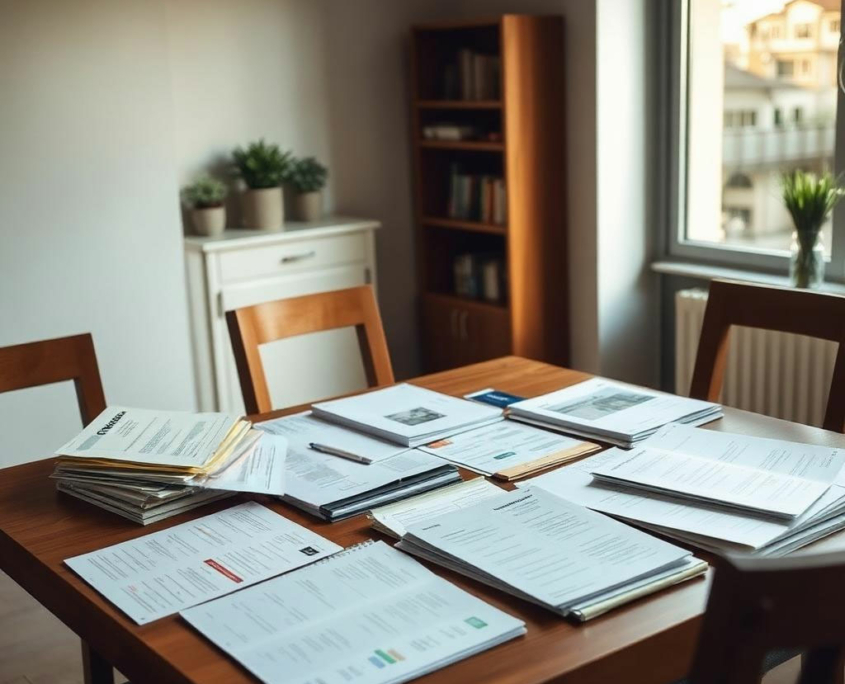
Here is the list of documents considered as acceptable evidence by the 3 regions. The more you gather, the more accurate and favourable the result will be.

Plans & building permits

Building plans (floors, façades), building permits, as-built file. Provided for information, they help the assessor understand the geometry of the building.

Insulation work invoices

Contractor invoices specifying the type of insulation, thickness, material and treated surface. The invoice must be linked to the property’s address. Invoices for materials simply delivered are not admissible (Wallonia).

Insulation evidence (jobsite photos)

Localisable photo file showing the composition of walls and the presence and type of insulation. The photos must clearly identify the building and allow the materials to be recognised.

Heating & hot water documentation

Technical sheets of the boiler, water heater, heat pump. Brand, model, output, year of installation. EPB periodic inspection certificates and acceptance reports.

Ventilation system

Technical documentation of the ventilation system (single or dual-flow MVHR), commissioning report, EPB calculation note for heat recovery efficiency.

Renewable energy

Green certificates, certificate of guaranteed origin (COG), photovoltaic peak power, solar thermal collector area, SPF test report.

Energy grant files

Complete energy grant file or tax reduction request for energy-saving works. Including invoices, technical annexes and proof of award.

Product data & ATG

CE marking, technical approvals (ATG), Ug and g values of glazing (identifiable on the spacer), manufacturer’s technical documentation.

Air-tightness test (Blower Door)

Air-tightness measurement report compliant with the NBN EN 13829 standard and regional supplementary rules.

Previous EPC certificate

If your home has already been certified, prepare the reference number and the exact address shown on the previous certificate. In Wallonia, this is mandatory to complete the file.

By region

Regional specifics & official checklists

Each region has its own requirements and specific acceptable evidence. Download the official checklist for your region.

Wallonia

Specific requirements

  • Mandatory partial report if collective installation(s) in an apartment building
  • If a previous EPC exists: reference number + exact address required (contact certificat.peb@spw.wallonie.be if lost)
  • Architect’s signed certificate for thermal characteristics (year of construction, wall composition, insulation performance)
  • Complete jobsite file: signed contractor agreement + final settlement
  • Final EPB declaration and EPB report accepted as evidence
  • « Construire avec l’énergie » certificate taken into account

Brussels

Specific requirements

  • DIU (Subsequent Intervention File) mandatory since 2001 for any work — contains plans, invoices, photos, technical sheets
  • Access to the common boiler room strongly advised (co-ownership with collective heating)
  • Periodic inspection certificate, acceptance or heating diagnosis
  • Lot number identifying the apartment in the co-ownership (deed of base, charges statement)
  • Specifications of the works with address and technical description
  • Provisional or final acceptance minutes to date the works

Flanders

Specific requirements

  • Gemeenschappelijke Delen obligatoire pour tout immeuble de 2+ unités — vérifiez sa disponibilité auprès du syndic
  • Documents sur l’année de construction obligatoires pour les bâtiments après 1970 (permis, extrait cadastral, Woningpas, acte notarié)
  • Les déclarations de propriétaires, entrepreneurs ou architectes ne sont PAS acceptées comme preuves
  • Conformité urbanistique et numéro de boîte aux lettres requis pour appartements
  • Verklaringen van overeenkomstigheid (attestation STS/ATG) signée par l’entrepreneur acceptée
  • Rapport d’audit de chauffage, attestation de nettoyage et combustion
Practical tips

On the day of the visit

Beyond documents, a few simple actions make the assessor’s work easier and contribute to a more accurate result.

Access to all rooms
The assessor must access the entire home: living spaces, cellar, attic, garage, boiler room and outbuildings. Provide the necessary keys.

Access to technical installations
Clear access to the boiler, water heater, meter and electrical panel. The assessor must record nameplates and labels of equipment.

Historical jobsite photos
Photos taken during insulation, roofing or window works are very valuable visual evidence to improve your score.

Owner‘s presence recommended
You know your home’s history. Your presence helps answer questions about past works and authorise possible partial dismantling.

The process

How does EPC certification work?

01

Booking

Order online. You receive the preparation checklist for your region.

02

On-site visit

The assessor records the characteristics: geometry, walls, insulation, heating, ventilation, DHW, renewables.

03

Data entry & calculation

Back at the office, data is entered into the official software for your region (PACE, Certibru-res, EPB-software).

04

Receiving the certificate

The certificate is filed in the regional database and sent to you within 30 days.

Your EPC certificate at the best price

Certinergie, Belgium’s leader in EPC certification since 2011 — accredited in all 3 regions.

Studio

from €165 incl. VAT

Most requested
House

from €265 incl. VAT

Building (2 units)

from €365 incl. VAT

Price varies depending on the surface area and complexity of the building. See our detailed rates.

Learn more by region

Visit our dedicated pages for full details on EPC certification in your region.

Bruxelles

EPC Brussels – Heating EPC, 2026-2033 reform

Wallonia

EPC Wallonia – PACE, scale A++ to G

Flandre

EPC Flanders – Labels A+ to F, Woningpas

Frequently asked questions

The EPC certificate can be carried out without any documents. The assessor then proceeds by visual observation and applies regulatory default values. However, these values are by nature ‘unfavourable’ and will penalise the final result. The more documents you have, the better the score obtained.

The visit usually lasts between 30 minutes (studio) and 2 hours (large house). A well-prepared home with accessible documents allows for a faster, more efficient visit. The assessor then carries out data entry at the office, which takes a similar amount of time.

No, the EPC certificate evaluates the current state of your home. The assessor identifies existing elements and calculates performance as is. If you have ongoing works, it is best to finish them before the visit so they can be taken into account.

In Wallonia, invoices for materials simply delivered are not admissible as acceptable evidence. Contractor invoices certifying actual installation in the building are required. In Flanders, material invoices are accepted if installation is corroborated by other evidence (visual observation or photos).

In Wallonia, a partial report on collective installations must be available (provided by the co-ownership). In Flanders, an EPC Common Areas is mandatory for any building with 2+ units. In Brussels, ask the property manager for access to the boiler room and documents related to common installations.

Yes, with your prior authorisation. The assessor may carry out partial dismantling (removing a recessed spotlight, drilling a small hole in a joint) to check for the presence of insulation. They will inform you of the relevance of these steps in light of the expected results.

No. Each region has its own certification protocol, calculation software (PACE in Wallonia, Certibru-res in Brussels, EPB-software in Flanders) and performance scales. Acceptable evidence also varies from region to region, hence the importance of consulting the checklist specific to your region.

The EPC certificate is mandatory for sale or rental and provides an overall energy score. The housing audit (Wallonia) is an in-depth planning tool that provides access to renovation grants. These are two complementary documents with different objectives.

Ready to obtain your EPC certificate?

Gather your documents, book an appointment and let our accredited assessors produce an EPC certificate that reflects the real quality of your property.

Order my EPC certificate Contact us

© Certinergie NPO – VZW rue Haute Voie 5 4537 Verlaine / Chaussée de Tirlemont 156, 5030 Gembloux / Brusselsesteenweg 599,3090 Overijse / Avenue Louise 367 1050 Bruxelles RPM ASBL 0536.501.654. RPM SRL 0831.937.722. Certinergie Luxembourg SARL